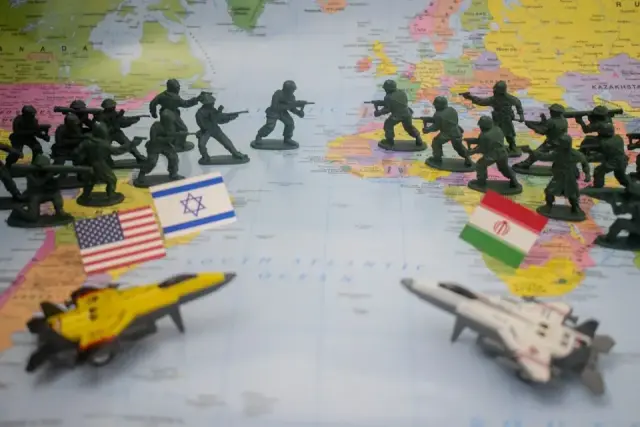
Resumption of Hostilities
Iran and Israel traded heavy fire on Monday, June 8, 2026, following a resumption of hostilities that began the previous day. This exchange marks a serious escalation, potentially jeopardizing diplomatic efforts aimed at de-escalating tensions between Tehran and Washington, which are being facilitated by Pakistan. The situation has drawn international attention, with calls for restraint from global leaders.
Iran's Retaliation and Israeli Response
On Sunday evening, Iran launched a salvo of missiles at Israel, marking the first such attack since an April ceasefire had paused the war involving the United States and Israel. This action was reportedly in retaliation for an Israeli strike on the southern suburbs of Beirut, Lebanon. In the early hours of Monday, the Israeli military responded with a series of airstrikes targeting western and central Iran, including the capital, Tehran. Iranian state media confirmed strikes on a military site in Tabriz and the Karun Petrochemical Company in the southwest, leading to the evacuation of the Mahshahr Petrochemical Special Economic Zone.
Further Iranian Strikes and Claims
Following Israel's response, Iran launched another wave of missiles directed at Israel. Iran’s Islamic Revolutionary Guard Corps claimed responsibility for striking the Nevatim and Tel Nof airbases, as well as industrial sites located in Haifa. These actions represent a significant escalation in the ongoing conflict between the two nations, with both sides employing missile technology in direct attacks.
US President's Call for Calm
U.S. President Donald Trump urged both Iran and Israel to cease their attacks immediately. He conveyed this message via his Truth Social media account, stating, “Israel and Iran must immediately stop ‘shooting.’” Trump had previously indicated to the Financial Times that the Iranian strikes would not derail his administration’s peace talks with Tehran, asserting that Israeli Prime Minister Netanyahu “doesn’t call the shots.”
Houthi Involvement and Maritime Threats
The Iranian-backed Houthi rebel group in Yemen also claimed responsibility for firing a barrage of missiles toward the Tel Aviv area early Monday. The Israeli military reported that its air defenses successfully intercepted a single missile launched from Yemen. The Houthis further announced a “complete and total ban on Israeli maritime navigation in the Red Sea,” declaring all enemy movements as legitimate military targets. This expands the conflict's reach into vital shipping lanes.
Lebanon's Situation and Ceasefire Concerns
In Lebanon, the situation in Beirut appeared relatively calm on Monday, a day after Israeli airstrikes targeted the southern suburbs, which Israel stated were in response to an earlier Hezbollah rocket attack on northern Israel. However, Israeli airstrikes persisted in southern Lebanon, resulting in at least four reported fatalities on Monday. The renewed hostilities directly threaten ongoing negotiations between the United States and Iran, particularly concerning Iran's insistence that any ceasefire agreement must include Lebanon. Iran's Foreign Ministry stated on Monday that the U.S. bears responsibility for any Israeli violations and escalations, emphasizing that a ceasefire in Lebanon is an integral part of the April 8 truce agreement. Lebanese authorities, however, maintain that U.S.-Iran talks are separate from Lebanon’s U.S.-mediated negotiations with Israel. Hezbollah continued its attacks on northern Israel and Israeli forces within southern Lebanon, despite a conditional ceasefire announced after the fourth round of Lebanese-Israeli talks in Washington last week, which was contingent on Hezbollah halting its attacks.
Why it matters
The direct exchange of fire between Iran and Israel, including missile strikes on each other's territories, represents a significant escalation of a long-simmering conflict. This direct confrontation risks drawing regional and international powers into a wider conflict, disrupting global energy markets and threatening the stability of the Middle East. The involvement of proxy groups like the Houthis further complicates the geopolitical landscape, extending the conflict's reach and impact.
What happens next
The immediate next step will likely involve further retaliatory actions or de-escalation efforts from both Iran and Israel. The ongoing U.S.-Iran peace talks are at a critical juncture, and their success or failure will heavily depend on the actions of both nations in the coming days. International diplomatic pressure is expected to intensify as leaders attempt to prevent a full-scale regional war. The status of the Red Sea, with the Houthi ban on Israeli maritime navigation, will also be closely watched.
Public Impact
Civilians in both Iran and Lebanon are directly affected by the airstrikes, facing potential casualties and damage to infrastructure, as seen with the strikes on agricultural land in Syria and petrochemical facilities in Iran. Residents in northern Israel and areas targeted by Iranian missiles are also impacted by the immediate threat of attack. The broader public impact includes the disruption of regional stability, potential economic consequences due to threats to maritime navigation in the Red Sea, and the uncertainty surrounding the ongoing peace negotiations which aim to bring an end to hostilities.
Source: Al-Monitor.