The Hidden Battle in the AI Arms Race
The recent high-stakes meeting between U.S. and Chinese leaders in Beijing placed artificial intelligence at the center of global competition. While the discussion focused on establishing guardrails for AI development, a deeper strategic divide emerged. The U.S. faces a critical choice: compete on China’s terms—centralized, state-driven, and resource-intensive—or redefine the race around a model that plays to America’s strengths. The outcome could shape not just technological leadership but the balance of global influence for decades.
China’s approach to AI relies on a fusion of state power, industrial policy, and near-unlimited access to data. State-owned enterprises can mobilize capital, energy, and surveillance infrastructure in ways that democratic nations cannot—and should not—attempt to replicate. If the contest hinges solely on who can build the largest data centers or amass the most computing power, the gap between U.S. and Chinese capabilities will inevitably shrink. This reality has prompted a growing chorus of experts to argue that America must pivot toward a fundamentally different architecture: one that is distributed, resilient, and embedded in the hands of individuals and small teams.
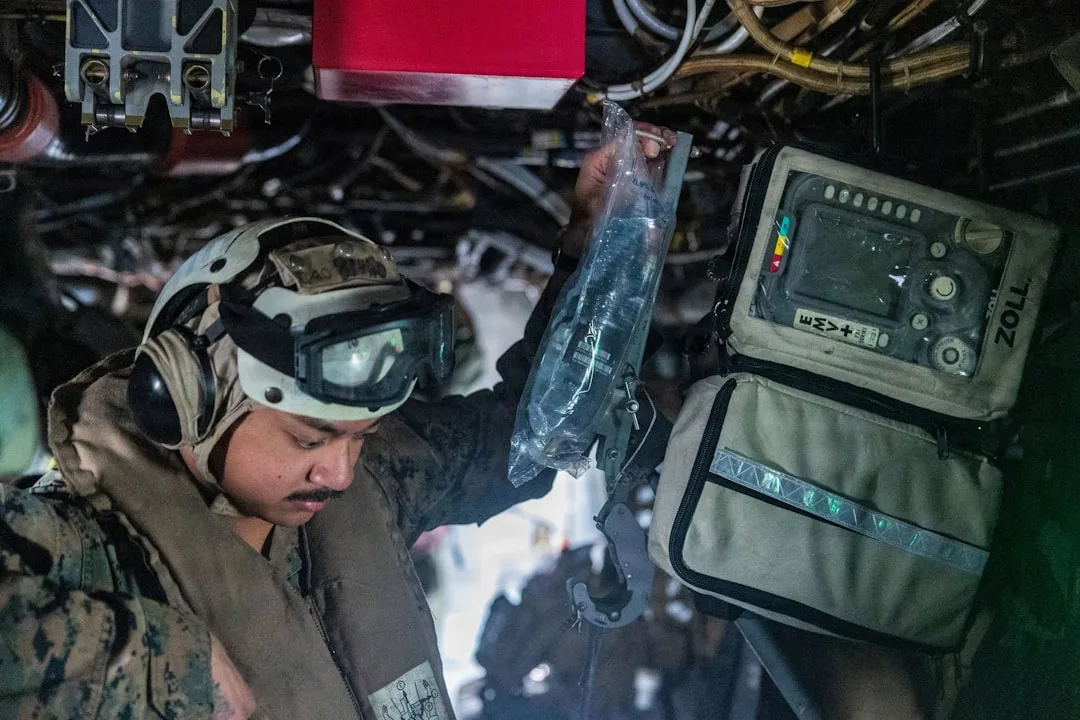
At the heart of this shift is a recognition that centralized AI systems, while powerful in controlled environments, falter in real-world conditions where connectivity is unreliable or adversaries seek to disrupt operations. The U.S. military, for example, has long grappled with the limitations of cloud-dependent systems in contested environments. A fighter jet maintainer troubleshooting an aircraft at 3 a.m., a special operations team operating in a communications-denied zone, or a medic navigating a blackout after an attack cannot afford to wait for a signal to reach a distant server. Their decisions are immediate, high-stakes, and often life-or-death. For them, AI must function locally, without dependence on a single point of failure.
Why Distributed AI Aligns with American Strengths
The case for distributed AI extends beyond military applications. It reflects a broader advantage rooted in America’s economic and political systems. Open markets, democratic institutions, and a culture of entrepreneurial innovation favor decentralized solutions. Unlike China’s top-down model, where a handful of state-backed entities control development, the U.S. thrives when innovation is dispersed across thousands of companies, research labs, and individual users. This approach not only accelerates progress but also ensures that AI systems remain adaptable, transparent, and accountable to the people who rely on them.
Technological advancements are making this vision increasingly feasible. AI capabilities that once required massive data centers can now run on laptops, tablets, and edge devices. The shift toward smaller, specialized models—tailored to specific professions, missions, or workflows—further reduces the need for monolithic, one-size-fits-all systems. A front-line medic doesn’t need an AI trained on every possible medical scenario; they need a model optimized for battlefield triage, trauma response, and the unique constraints of their environment. Similarly, a pilot requires AI that understands aviation protocols, not a general-purpose tool struggling to prioritize critical alerts. This specialization not only improves performance but also enhances trust, as users interact with systems designed for their exact needs.
The contrast with China’s approach is stark. Beijing’s centralized model excels in environments where the state can dictate priorities, control data flows, and suppress dissent. But it struggles in dynamic, unpredictable scenarios where local autonomy is essential. Authoritarian systems are inherently brittle; they rely on rigid hierarchies and top-down control, which become liabilities when conditions change rapidly. The U.S., by contrast, has spent decades refining doctrines of decentralized command and control, from military operations to disaster response. Distributed AI is a natural extension of this philosophy, offering a way to maintain operational flexibility even when communications are severed or adversaries seek to exploit vulnerabilities.
Why It Matters
The stakes of this competition extend far beyond technology. AI is poised to redefine industries, military strategy, and even the nature of democracy itself. A world where AI is controlled by a handful of centralized entities—whether corporate or state-run—risks concentrating power in ways that undermine individual autonomy and innovation. For the U.S., the challenge is not just to outbuild China in raw computing power but to demonstrate that democratic values can produce superior outcomes. Distributed AI offers a path to do exactly that: systems that are resilient, adaptable, and trusted by the people who use them.
This shift also has profound implications for global alliances. America’s network of partners and allies operates on principles of interoperability and shared decision-making. A distributed AI architecture aligns with these values, enabling seamless collaboration without requiring all participants to cede control to a single authority. In contrast, China’s centralized model is inherently exclusionary, designed to serve the interests of the state rather than the collective needs of a diverse coalition. For nations weighing their strategic partnerships, the choice between these two approaches could become a defining factor in the decades ahead.
The public impact of this debate is already visible. Consumers, businesses, and government agencies are increasingly reliant on AI for everything from healthcare diagnostics to supply chain management. A centralized system might offer efficiency in stable conditions, but it becomes a liability during crises—whether a cyberattack, a natural disaster, or a geopolitical conflict. Distributed AI, by contrast, ensures that critical functions remain operational even when the broader network is compromised. For families relying on AI-assisted medical devices, businesses managing just-in-time logistics, or first responders coordinating disaster relief, the difference could be measured in lives and livelihoods.
What Happens Next
The U.S. has taken initial steps to formalize its AI strategy, but the path forward remains uncertain. The Department of Defense has already begun experimenting with edge-based AI systems, and private-sector innovation continues to push the boundaries of what’s possible with smaller, specialized models. However, translating these advancements into a cohesive national strategy will require sustained investment, policy coordination, and a willingness to challenge the assumption that bigger always means better. The upcoming fiscal year will likely see increased funding for distributed AI research, particularly in areas like military logistics, healthcare, and critical infrastructure.
Congress and the administration will also need to address regulatory and ethical questions. How can the U.S. ensure that distributed AI systems remain secure, interoperable, and aligned with democratic values? What safeguards are needed to prevent misuse while preserving the flexibility that makes these systems so powerful? These debates will unfold against the backdrop of an intensifying global competition, where China is unlikely to cede ground without a fight. The next 12 to 18 months will be critical in determining whether the U.S. can establish a durable advantage—or whether it will find itself playing catch-up in a race it once led.
One historical parallel offers a cautionary tale. In the early 2000s, the U.S. dominated the global telecommunications market, only to see its lead erode as China invested heavily in centralized infrastructure and state-backed champions like Huawei. The AI race could follow a similar trajectory if America fails to adapt. The difference this time is that the stakes are even higher. AI is not just another industry; it is the foundation of the next era of economic and military power. The question is whether the U.S. will repeat past mistakes or chart a new course—one that leverages its unique strengths to outmaneuver a rival playing by different rules.
Original reporting by Washington Examiner.